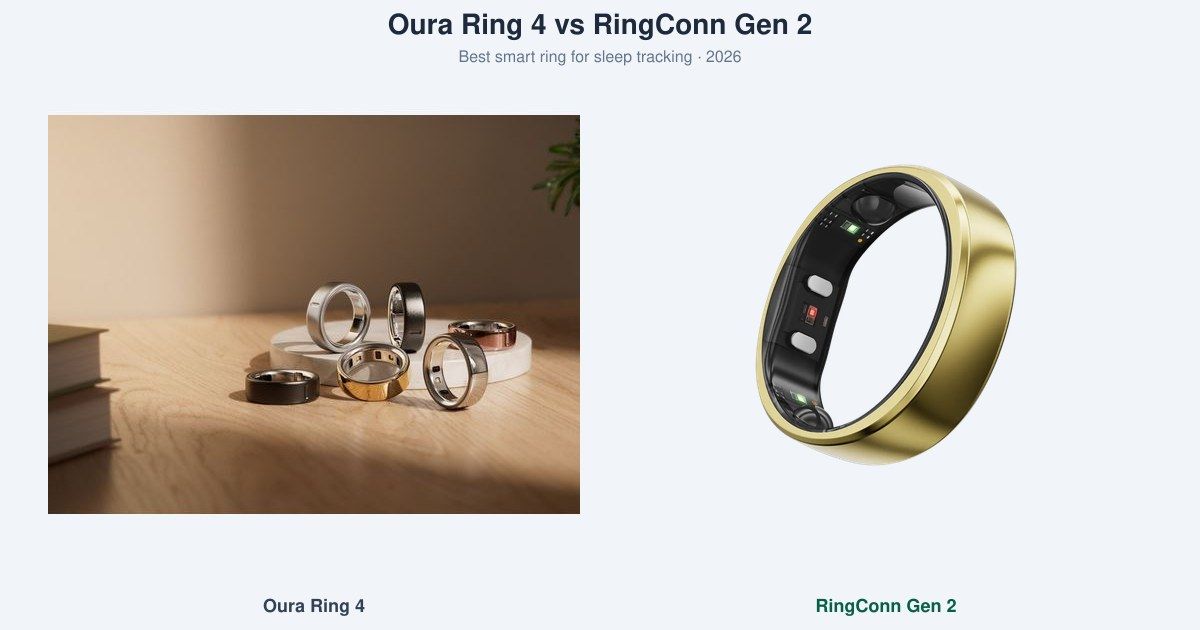
If you wake up tired despite a full night in bed, the problem is rarely “not sleeping enough.” It’s often fragmented sleep, undetected apnea, or poor recovery you can’t see without data. In 2026, wearable health tech has moved past step counts: the best smart ring for sleep is one you forget you’re wearing—and that still captures reliable overnight vitals night after night.
This Oura Ring vs RingConn comparison focuses on what matters over months of use, not launch-day spec sheets: sleep tracking accuracy, comfort during restless nights, battery habits, and the real cost of subscriptions. Both rings are strong contenders; they optimize for different sleepers.
Browse more guides: See our best smart rings for sleep (2026) ranked list, RingConn Gen 2 buyer’s guide, or Oura alternatives without a subscription.
Why Sleep Tracking Still Matters in 2026
Sleep quality affects mood, blood pressure, weight, focus, and long-term cardiovascular risk. Yet most people still judge sleep by how they feel in the morning—a poor proxy when stress, caffeine, or hidden breathing issues skew perception.
Smart rings solve a practical problem wrist devices struggle with: consistent overnight wear. A ring doesn’t dig into your wrist, buzz with notifications, or die before breakfast. Finger placement also gives cleaner pulse and temperature signals than many wrist trackers, which matters when algorithms estimate light, deep, and REM stages.
The goal isn’t another dashboard. It’s actionable patterns: which nights correlate with lower HRV, more awakenings, or breathing disturbances—and whether small changes (timing, alcohol, room temperature) actually move the needle over weeks.
Quick Comparison: Oura Ring 4 vs. RingConn Gen 2
| Factor | Oura Ring 4 | RingConn Gen 2 |
|---|---|---|
| Starting price | From ~$349 | From ~$299 |
| Subscription | ~$5.99/mo or ~$69.99/yr (required for full insights) | None |
| Claimed battery | 5–8 days | 10–12 days |
| Sleep staging | Industry-leading; PSG-validated lineage | Solid; trails Oura in third-party comparisons |
| Standout sleep feature | Readiness + deep trend analysis | Sleep apnea risk monitoring (OSA) |
| Comfort | Ultra-light titanium; very low profile | Slim (≈2 mm); among thinnest rings |
| Best for | Data-driven optimizers | Subscription-averse, long-battery users |
Interactive tool
Oura Ring 4 vs. RingConn Gen 2 — full spec comparison
Toggle products and highlight differences to focus on what matters for your sleep goals.
Swipe sideways to compare columns · toggle products above
| Spec | Oura Ring 4 | RingConn Gen 2 |
|---|
Specs based on manufacturer documentation and our editorial research. Prices are approximate MSRP—not live Amazon pricing.
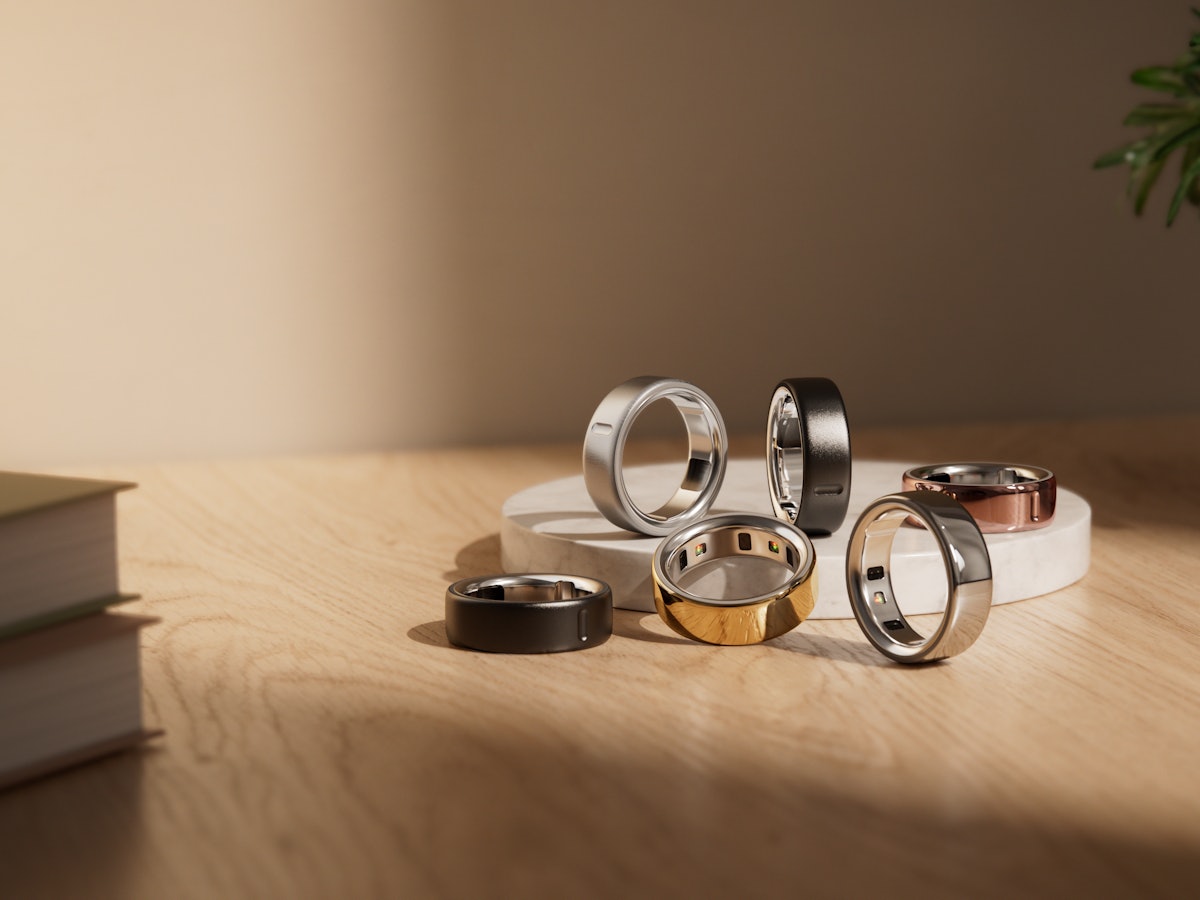
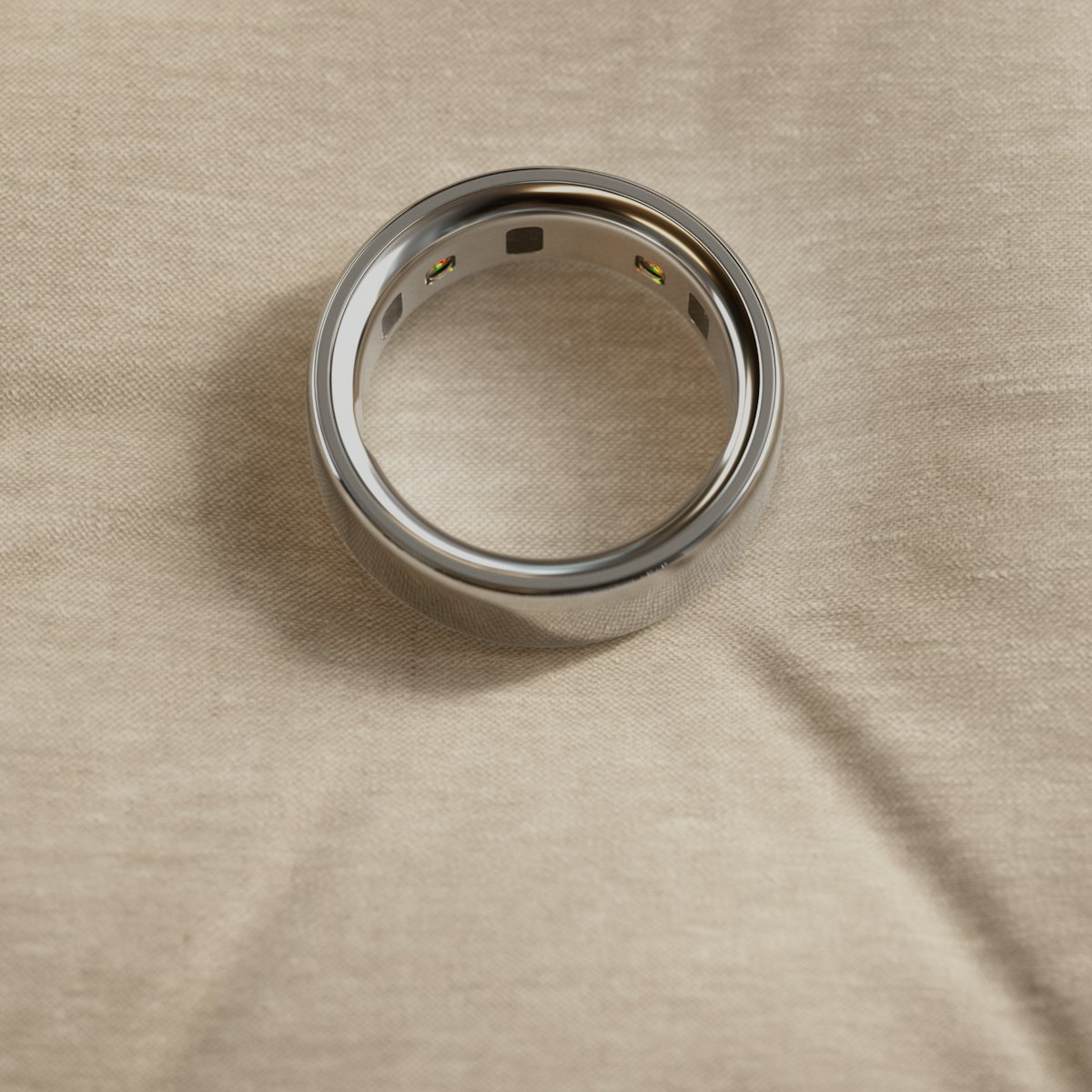
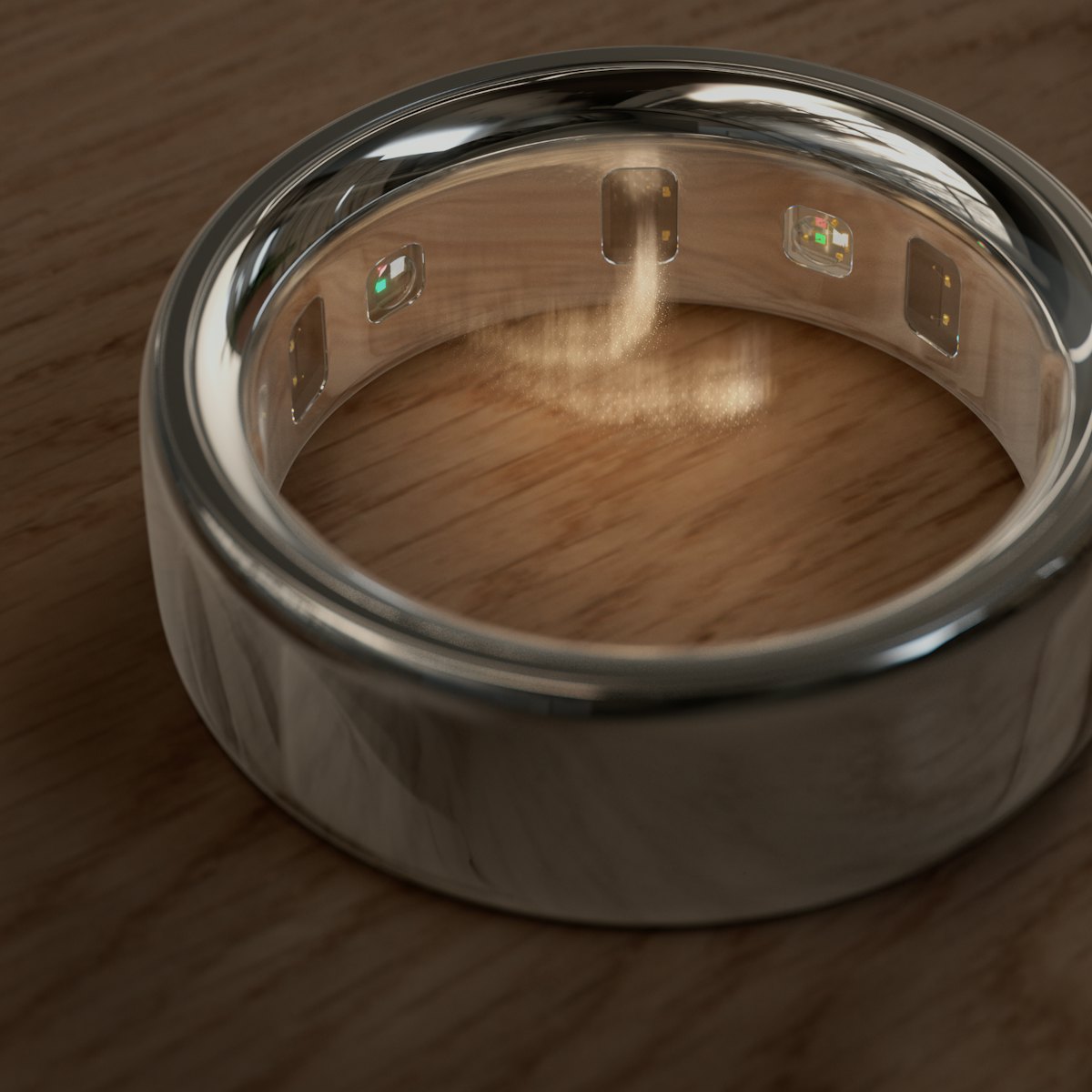
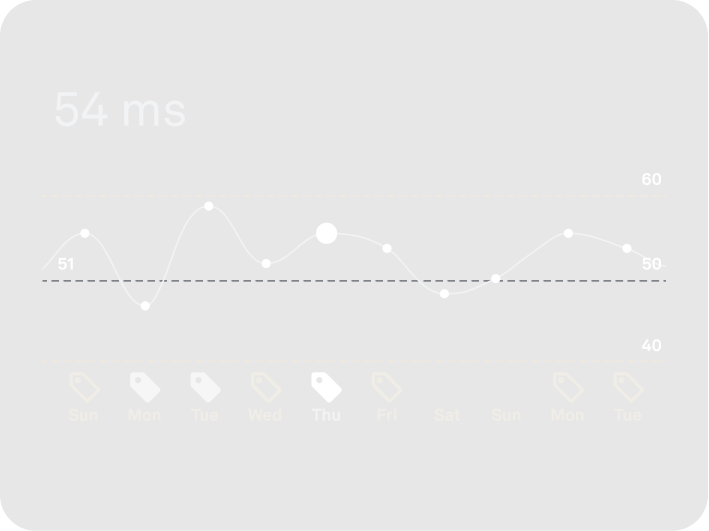
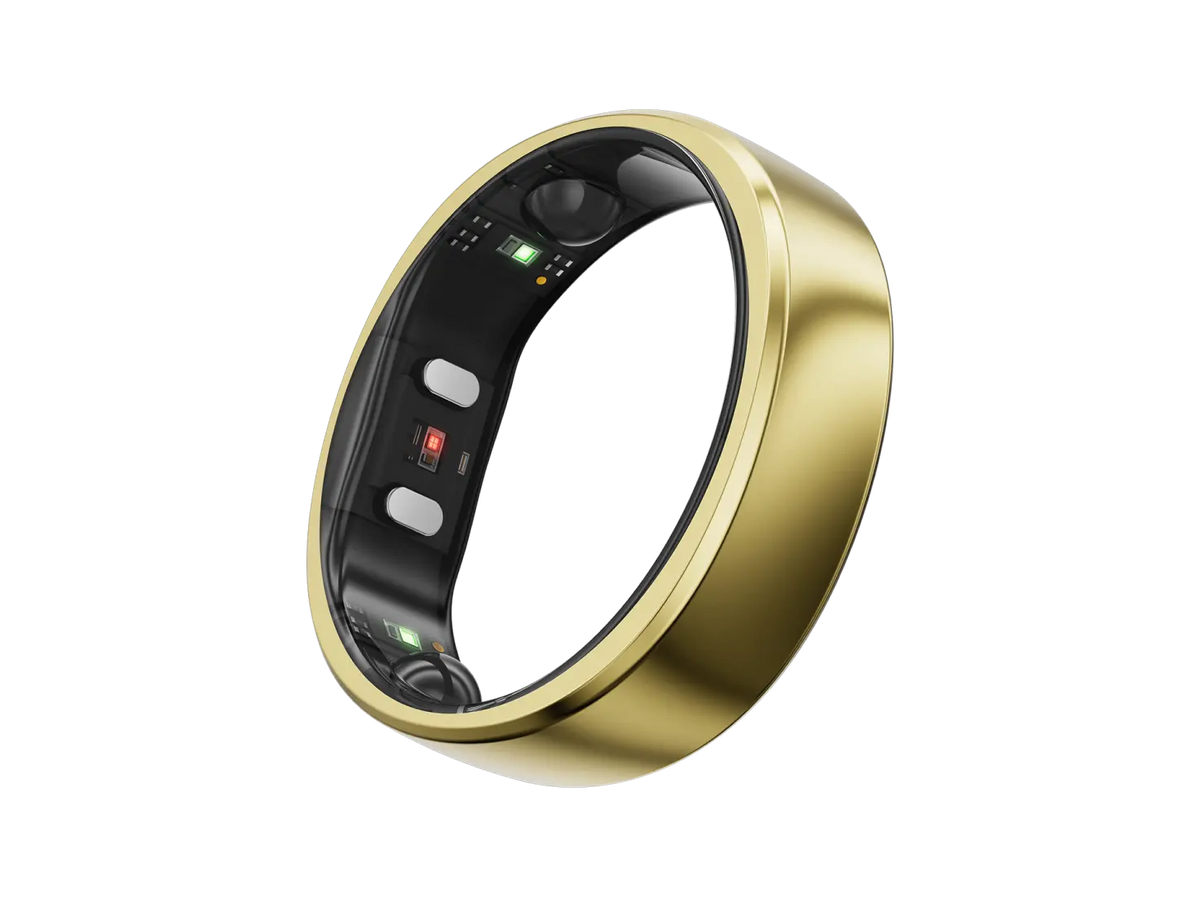
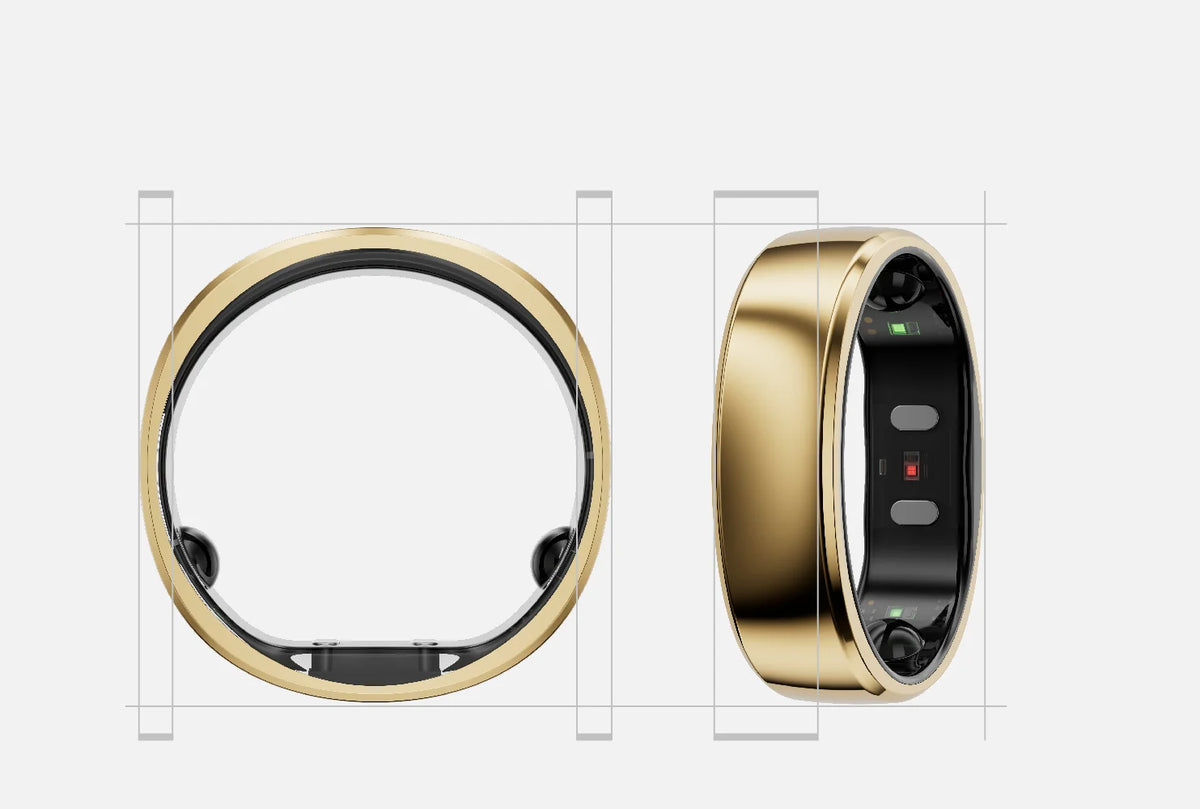
Product photos: Oura Ring 4 vs. RingConn Gen 2
Official product imagery for side-by-side reference. We do not photograph products in-house.
Oura Ring 4
RingConn Gen 2


Sleep Tracking Accuracy: Where the Gap Is Real
Oura Ring 4
Oura’s edge in sleep tracking accuracy isn’t marketing—it’s backed by published validation work against polysomnography (clinical sleep studies). Oura has consistently ranked at or near the top of consumer wearables for distinguishing sleep stages and estimating total sleep time.
What that means in daily use:
- Sleep stages (light, deep, REM) tend to align more closely with how you actually slept than many competitors.
- Readiness and Sleep Scores synthesize HRV, resting heart rate, temperature deviation, and activity into guidance many users find useful—not just raw graphs.
- Trend view over weeks helps separate a bad night from a declining pattern (e.g., rising resting HR, falling deep sleep).
Limitations worth knowing:
- No consumer ring replaces a sleep clinic. Scores are estimates, not diagnoses.
- Without an active membership, most interpretive sleep detail is locked—you see basic scores, not the full picture.
- Stage accuracy still degrades with motion, illness, or highly irregular schedules.
RingConn Gen 2
RingConn tracks the same core sleep metrics: stages, efficiency, time in bed, awakenings, naps, plus overnight HR, HRV, SpO₂, and skin temperature. In independent reviews, it stacks up well against market leaders for overnight vitals and disruption detection—but sleep staging precision generally trails Oura when compared to published benchmarks and side-by-side testing.
Where RingConn differentiates is breathing-related sleep insight:
- Sleep apnea (OSA) monitoring assesses risk using multi-night SpO₂ and breathing-disturbance data (RingConn cites >90% accuracy in internal lab testing—not independent clinical validation).
- OSA mode may require manual activation or dedicated monitoring cycles depending on app settings; enabling it can increase power use.
- For someone who snores heavily, wakes gasping, or has unexplained daytime fatigue, this feature can be a reason to choose RingConn—even if stage charts aren’t as refined as Oura’s.
Accuracy verdict: For best-in-class sleep staging and longitudinal readiness insights, Oura Ring 4 wins. For overnight vitals plus apnea-risk screening without a subscription, RingConn Gen 2 is the stronger value play—especially if you’d use OSA alerts as a prompt to see a doctor, not as a final diagnosis.
Battery Life: Specs vs. Six Months of Real Life
Oura Ring 4
- Official range: 5–8 days per charge (varies by ring size and settings).
- Real-world reports: Many users see roughly 5–6 days, sometimes less with heavy SpO₂ sampling, frequent syncing, or smaller ring sizes.
- Charge time: Often ~20–80 minutes depending on starting level.
- Long-term note: Like all sealed smart rings, battery capacity fades over 1–2 years. Planning for mid-life replacement or tolerance for shorter cycles is part of the ownership math.
For sleep tracking, battery matters because missed nights corrupt trends. A ring that dies every 3–4 days forces charging routines that overlap with sleep—exactly when you need uninterrupted data.
RingConn Gen 2
- Official range: 10–12 days (larger sizes tend toward the upper end).
- Real-world reports: Often 8–10+ days in testing; still well above Oura for most users.
- Charging case: Included case holds multiple full charges (manufacturer claims extend total untethered use dramatically—weeks between wall outlets).
- OSA monitoring: Can shorten battery when enabled due to more frequent sensing.
Battery verdict: RingConn Gen 2 is the clear winner for low-maintenance, continuous tracking. Oura is acceptable for disciplined chargers but not class-leading.
Subscription Costs: The Hidden Multi-Year Price
This is often the deciding factor in Oura Ring vs RingConn—and it only shows up after the first month.
Oura Ring 4
- Hardware: From ~$349 (finish-dependent; premium materials cost more).
- Membership: ~$5.99/month or ~$69.99/year after the included first month.
- What membership unlocks: Detailed sleep and readiness breakdowns, trends, temperature/HRV context, Explore content, API access, and most features that make Oura feel “smart” rather than a basic score generator.
- Without membership: Readiness, Activity, and Sleep scores remain visible at a surface level; deep charts, explanations, and historical insight are largely gated.
Illustrative 3-year total cost of ownership (TCO):
- Ring (
$349) + 3 years membership ($210) ≈ ~$559 - At 5 years: hardware +
$350 in fees ≈ **$699**
Oura’s subscription is justified only if you open the app most days and act on trends. If you’d glance at a sleep score once a week, the fee hurts.
RingConn Gen 2
- Hardware: From ~$299 (often discounted during seasonal sales).
- Subscription: $0 — full app features, sleep apnea monitoring, and health metrics included.
- 3-year TCO: ~$299 (plus any accessories).
Subscription verdict: RingConn wins on predictable, one-time cost. Oura wins on depth of insight—if you’ll actually use it. Budget-conscious sleep trackers or anyone allergic to recurring fees should weigh RingConn heavily.
Comfort: The Factor You Can’t Fix in Software
Sleep data is only as good as wear compliance. Both rings are among the most comfortable options in wearable health tech—but they feel different over long nights.
Oura Ring 4
- Materials: Titanium construction; very light (roughly 3–4 g depending on size).
- Design: Redesigned interior sensor layout vs. Gen 3; smoother for many users.
- Feel: Low profile; most side-sleepers report forgetting it’s on after a few nights.
- Sizing: Free sizing kit before purchase—critical; a tight ring ruins comfort and data quality.
RingConn Gen 2
- Dimensions: Among the thinnest smart rings (~2 mm thickness; ~6.8 mm width).
- Weight: ~2–3 g.
- Design: Slight squarish inner profile may reduce rotation on the finger.
- Feel: Excellent for users who found bulkier rings intrusive; strong choice for smaller hands or those sensitive to jewelry at night.
Comfort verdict: Tie for most users—both are comfortable enough for nightly wear. RingConn may edge out for users who want the absolute thinnest ring; Oura may edge out for those prioritizing premium materials and a mature sizing ecosystem. Try the sizing kit for either brand before committing.
Long-Term Usage: What Six Months Looks Like
Specs tell you week one. Long-term ownership tells you whether a ring earns its place.
Oura Ring 4 — best if you’re building a sleep habit around data
- Strengths over time: Trend lines become more valuable than single-night scores; Readiness often helps users correlate alcohol, late meals, or training load with next-day fatigue.
- Ecosystem: Integrations (Apple Health, Google Fit, select wellness platforms) and a mature app reduce friction for multi-device users.
- Weaknesses over time: Subscription fatigue is real; battery fade and the charging ritual can erode compliance; frustration if you paid $349+ and feel locked out of insights without paying annually.
RingConn Gen 2 — best if you want low friction and full features out of the box
- Strengths over time: Infrequent charging + included case = fewer “dead ring” nights; no annual fee means guilt-free long-term ownership; OSA monitoring may surface issues a basic sleep score would miss.
- Weaknesses over time: App polish and insight narrative are less refined than Oura; sleep stage charts may feel “good enough” rather than revelatory; software update cadence and feature depth still maturing vs. Oura’s decade of iteration.
Official product videos
Embedded from official brand YouTube channels—not filmed or edited by SleepChoiceGuide.
Introducing Oura Ring 4
Official launch overview: Smart Sensing, titanium build, and battery life.
Source: ŌURA (YouTube)
Oura Ring 4: Smart Sensing
How Oura's adaptive sensors aim to improve overnight accuracy.
Source: ŌURA (YouTube)
RingConn Gen 2 sizing guide
Official fit tutorial — sizing affects comfort and sleep data quality.
Source: RingConn Smart Ring (YouTube)
The Real-Life Verdict: Who Is This For?
Choose the Oura Ring 4 if:
- You want the best smart ring for sleep when staging accuracy and readiness coaching matter most.
- You’ll use daily scores and weekly trends to adjust behavior—not just collect data.
- You’re comfortable with ~$70/year ongoing as part of the product, like a gym membership for sleep.
- You value a mature app, strong validation history, and broad third-party ecosystem support.
- Subscription cost is acceptable because the insights genuinely change what you do.
Choose the RingConn Gen 2 if:
- You refuse subscriptions and want full features at purchase price.
- Battery life and charging convenience matter—travel, irregular routines, or simply not thinking about chargers.
- You want sleep apnea risk monitoring without paying for premium tiers elsewhere.
- You need solid overnight vitals and sleep summaries without needing the most granular stage science.
- Upfront value (~$299, often less on sale) and lower multi-year TCO are primary drivers.
Honest bottom line
There is no universal “best” ring—only the best ring for your sleep problem and your budget psychology.
- Oura Ring 4 is the analytical choice: pay more over time for the most trusted sleep intelligence layer in consumer wearable health tech.
- RingConn Gen 2 is the pragmatic choice: pay once, charge rarely, and still get meaningful sleep and breathing-related data.
If your sleep issues are severe (snoring, witnessed apneas, extreme daytime sleepiness), neither ring replaces medical evaluation—but RingConn’s OSA tooling may be the better nudge toward a clinical workup. If your issue is optimizing recovery and understanding stage architecture, Oura remains the reference standard.
Pros & cons at a glance
Oura Ring 4
Pros
- Best-in-class sleep staging backed by published PSG validation lineage
- Mature app with Readiness trends, integrations, and a large third-party ecosystem
- Premium titanium build with recessed sensors for comfortable 24/7 wear
- Blood oxygen and breathing disturbance insights included in membership tier
Cons
- Requires ~$5.99/mo or ~$69.99/yr membership for full sleep and readiness detail
- Battery typically 5–6 days in real use — more charging than RingConn
- Higher multi-year total cost of ownership (~$559+ over three years)
- Consumer scores are estimates — not a substitute for clinical sleep testing
RingConn Gen 2
Pros
- No subscription — full app, OSA monitoring, and metrics included at purchase
- 10–12 day rated battery plus portable charging case
- Among the thinnest and lightest smart rings (~2 mm, ~2–3 g)
- Sleep apnea risk screening may prompt medical follow-up for at-risk sleepers
Cons
- Sleep staging precision generally trails Oura in third-party benchmarks
- App insights and narrative polish less mature than Oura's decade of iteration
- OSA accuracy based on manufacturer lab claims — not independent clinical validation
- Enabling OSA monitoring can reduce battery life
Frequently asked questions
Does Oura Ring 4 require a subscription?
Yes, for most users. A membership (~$5.99/month or ~$69.99/year after the first included month) unlocks detailed sleep stages, readiness breakdowns, trends, and most interpretive features. Basic scores remain visible without a plan, but the product feels limited without paying.
Does RingConn Gen 2 have a monthly fee?
No. RingConn includes app access, sleep apnea monitoring, and health metrics without a recurring subscription. You pay for hardware upfront (often ~$299, frequently discounted).
Which ring is more accurate for sleep stages?
Based on published validation work and third-party comparisons, Oura Ring 4 generally leads consumer wearables for sleep staging and total sleep time estimation. RingConn is solid for overnight vitals and disruption detection but usually trails Oura on stage precision.
Can either ring diagnose sleep apnea?
No. Neither device provides a medical diagnosis. RingConn offers OSA risk screening that may help you decide whether to seek clinical evaluation. Oura includes blood oxygen and breathing disturbance data, but both are wellness tools — not replacements for a sleep study.
Which ring has better battery life?
RingConn Gen 2 wins clearly: 10–12 days rated use plus a charging case, versus Oura's 5–8 day official range (often ~5–6 days reported). For uninterrupted trend data, RingConn's charging cadence is lower-friction.
Which should I buy on Amazon?
Choose Oura Ring 4 if you'll use daily readiness and stage trends and accept the annual membership. Choose RingConn Gen 2 if you want no subscription, longer battery, and OSA risk screening at a lower multi-year cost. Always verify current Amazon pricing, bundle terms, and return policies before buying.
Interactive tool
Smart Ring Size Calculator
Measure your finger circumference, then see suggested Oura Ring 4 and RingConn Gen 2 sizes. Fingers swell overnight—when between sizes, most sleepers prefer the larger fit.
Recommended sizes
Oura Ring 4
—
RingConn Gen 2
—
Estimates based on manufacturer sizing charts. Always confirm fit with an official sizing kit before purchase—especially for Oura.
Buying Oura? Order the free sizing kit first—Ring 4 sizes are proprietary and not interchangeable with standard jewelry sizes.
Oura Ring 4 Sizing Kit on AmazonMore smart ring guides
-
Best Smart Rings for Sleep (2026)
Ranked & compared—Oura, RingConn, Samsung Galaxy Ring, and Amazfit Helio Ring.
-
RingConn Gen 2 Buyer's Guide
Is RingConn worth it? Single-product guide for buyers who have already ruled out Oura.
-
Best Oura Alternatives (No Subscription)
Subscription-free rings when Oura annual membership is a dealbreaker.
Check Current Pricing on Amazon
Prices and promotions change frequently—especially for RingConn, which often sees seasonal discounts. Oura’s hardware pricing is relatively stable, but bundles and finish options vary.
Before you buy:
- Size before you buy Oura — Oura Ring 4 uses proprietary sizing. Order the Oura Ring 4 Sizing Kit first, then select your finish and size on the product page.
- Compare RingConn Gen 2 base price vs. kit with charging case on Amazon (color and size vary by listing).
- Factor Oura’s ~$69.99/year membership into your Year 1 and Year 3 budget—not just the ring sticker price.
Check current price on Amazon
See today's pricing, shipping options, and return policy for the Oura Ring 4 on Amazon. Opens the Oura Ring 4 Amazon listing (Silver, Size 8 by default)—change finish and ring size on Amazon before checkout.
View Oura Ring 4 on AmazonAffiliate link: We may earn a commission from qualifying purchases, at no extra cost to you. Product prices and availability on Amazon are subject to change. Verify current pricing, shipping, and return policies on Amazon before you buy. Affiliate disclosure.
Check current price on Amazon
See today's pricing, shipping options, and return policy for the RingConn Gen 2 on Amazon. Opens the RingConn Gen 2 Amazon listing—select your preferred color and ring size on the product page.
View RingConn Gen 2 on AmazonAffiliate link: We may earn a commission from qualifying purchases, at no extra cost to you. Product prices and availability on Amazon are subject to change. Verify current pricing, shipping, and return policies on Amazon before you buy. Affiliate disclosure.
Image & video credits
- Oura Ring 4 photos & app screenshot: Oura product media
- RingConn Gen 2 photos & app screenshot: RingConn product page
- Oura videos: ŌURA YouTube channel
- RingConn video: RingConn Smart Ring YouTube channel